
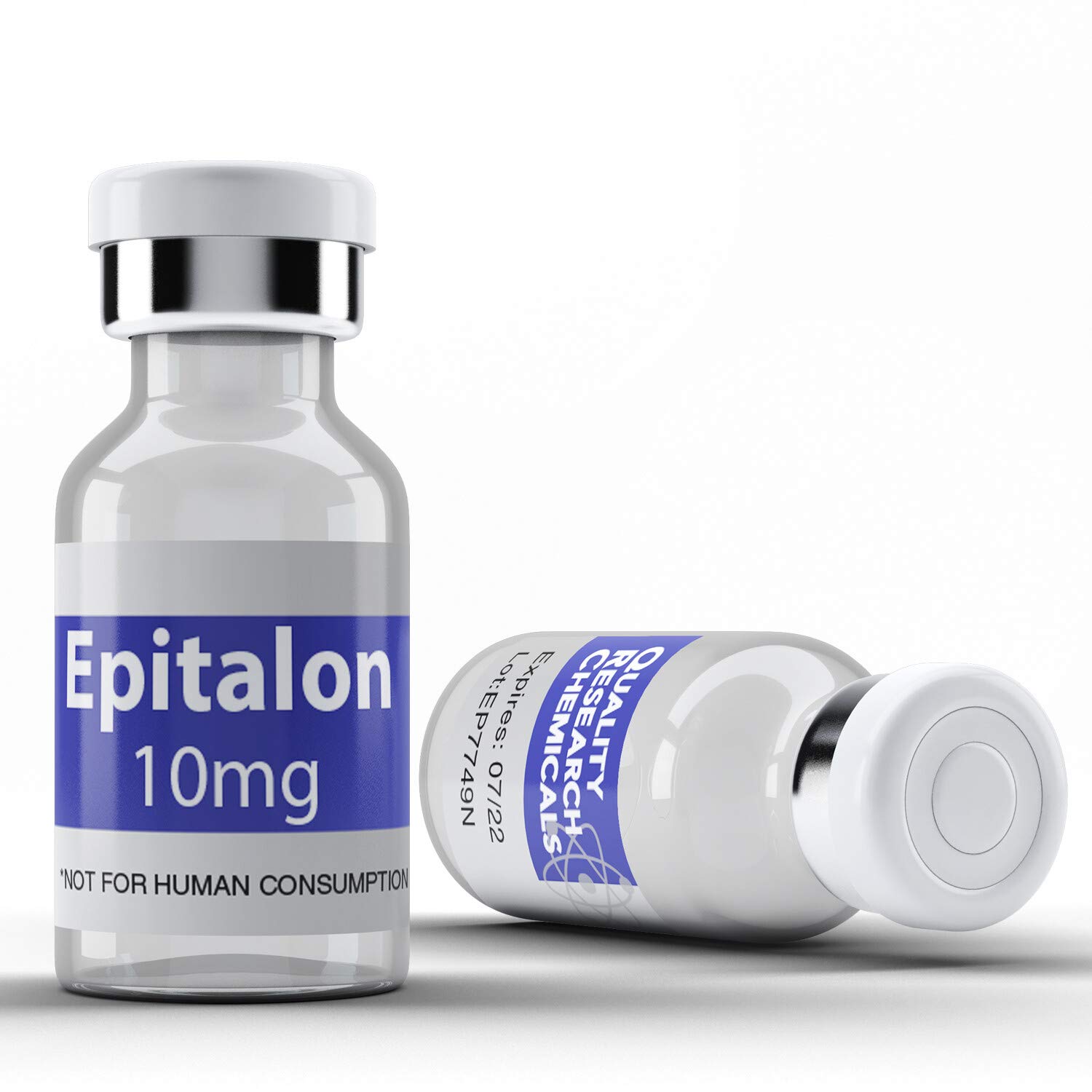

What is Epitalon?
Epitalon is a synthetic peptide that mimics the natural peptide of the pineal gland – that tiny, pea-sized gland deep in the brain best known for regulating the sleep-wake cycle through melatonin.
With increasing age, the pineal gland calcifies and produces less melatonin. Khavinson’s research suggested that restoring pineal gland function with Epitalon could slow this age-related decline. The main mechanism? Regulating telomere length.
How does Epitalon work?
The Science of Telomeres
To understand Epitalon, one must first understand telomeres.
Telomeres are protective caps at the ends of chromosomes, similar to the plastic ends on shoelaces.
Telomeres shorten with each cell division.
If the telomeres are too short, the cell can no longer divide – it ages or dies.
Shortened telomeres are a sign of biological aging.
The epitalone compound: Studies suggest that epitalone activates the enzyme telomerase, which can rebuild and lengthen telomeres. This could extend the lifespan of cells and delay the onset of age-related diseases.
Key benefits, scientifically proven
Although most studies have been conducted on animals or in small human studies (mainly in Russia and Eastern Europe), the results are promising.
1. Telomere Lengthening:
A groundbreaking study by Khavinson in 2003 showed that a ten-day course of Epitalon, repeated twice a year, led to a significant lengthening of telomeres in human white blood cells. This effect persisted for over a year after treatment.
2. Improved sleep and regulated circadian rhythm:
Because Epitalon affects the pineal gland, it naturally contributes to restoring healthy melatonin production. Users often report deeper sleep, falling asleep faster, and better adjustment to jet lag or shift work.
3. Immune System Regeneration:
Immune function declines with age (immunosenescence). Studies show that Epitalon can restore the function of T cells and normalize the activity of natural killer cells (NK cells). This allows the body to fight infections and even cancer cells more effectively.
4. Reduced oxidative stress:
Epitalon possesses antioxidant properties. It contributes to the reduction of lipid peroxidation (damage to fats in cell membranes) and increases the activity of endogenous antioxidants such as superoxide dismutase (SOD).
5. Potential Addition to Cancer Therapy:
This is a sensitive topic. Although epitalone activates telomerase (which is also active in cancer cells), research suggests that it does NOT stimulate tumor growth. In fact, some animal studies suggest that epitalone may even inhibit tumor development by restoring immune surveillance. However, individuals with a history of cancer should definitely consult a doctor before use.
The Khavinson studies:
What the clinical trials say:
Professor Khavinson conducted several studies with older participants:
Annual study of patients with ischemic heart disease: The group that received Epitalon had a 2.1 times lower mortality rate compared to the control group.
Studies in older women: Epitalon was able to restore menstrual function and reduce the risk of infectious diseases in some perimenopause women.
It is important to note that these studies were small and have not been comprehensively replicated by Western institutions such as the National Institutes of Health (NIH) or Harvard. Nevertheless, they form the basis for Epitalon’s good reputation.
How is Epitalon administered?
Epitalon is usually administered in two ways:
Subcutaneous injection (most common method): The standard protocol from the studies involves a once-daily injection of 5–10 mg for 10–20 days. This treatment is usually repeated twice a year.
Nasal spray (less effective): Some peptide providers offer Epitalon as a nasal spray. Although it is more convenient to use, its bioavailability is significantly lower than with injection.
Note: Epitalon is not approved for medical use in the USA. In gray market areas, it is considered a research chemical or dietary supplement.
Epitalon Side effects and safety
According to published literature, Epitalon has an excellent safety profile.
Reported side effects are rare and mild. Occasionally, slight redness at the injection site, mild dizziness, or temporary fatigue may occur.
No toxic effects were observed in clinical studies at standard doses.
Long-term safety: Since Epitalon has only been studied in humans for about 20-25 years, long-term effects (over 50 years) are unknown.
Who should avoid Epitalon?
Pregnant or breastfeeding women (no security data).
Individuals with active cancer (except under strict oncological supervision).
People with autoimmune diseases (due to the immunomodulating effect).
For individuals without prior blood tests – Telomere length and inflammatory markers should be determined before starting treatment.
| Menge | 10 xEpitalon 10mg, 20xEpitalon 10mg, 50xEpitalon 10mg, 100xEpitalon 10mg |
|---|
Ähnliche Produkte

Kaufen Sie Peptide
Kaufen Sie Peptide
Kaufen Sie Peptide
Kaufen Sie Peptide
Kaufen Sie Peptide

Kaufen Sie Peptide
Kaufen Sie Peptide
Kaufen Sie Peptide