
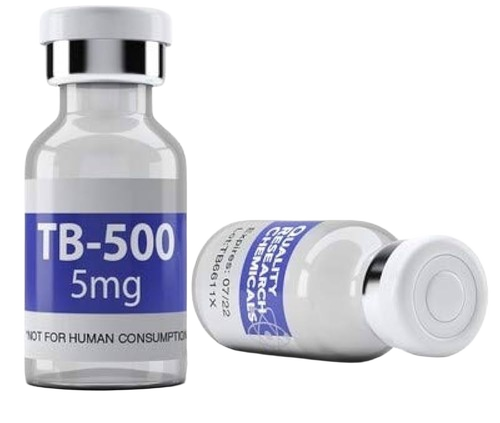

What is TB-500?
TB-500 is a synthetic version of a naturally occurring peptide found in almost all human and animal cells. Its active ingredient is a 43-amino-acid peptide fragment derived from thymosin beta-4 (TB4).
While thymosin beta-4 is a complete, naturally occurring protein, TB-500 is a shorter, synthetic fragment that mimics the most bioactive region of TB-4. Researchers are studying TB-500 to understand how this specific fragment, independent of the other functions of the complete protein, influences cell building, regeneration, and inflammation. In regenerative medicine and peptide research, few substances have attracted as much interest as TB-500. Often referred to as the „healing peptide“ along with BPC-157, TB-500 possesses a distinctive mechanism of action and a unique spectrum of potential benefits.
How does TB-500 work? (Suggested mechanisms of action)
Unlike conventional drugs that target a single receptor, TB-500 is thought to act via multiple signaling pathways at the cellular level:
Actin regulation (core mechanism): TB-500 binds to and sequesters actin—the most abundant protein in most cells. Actin is crucial for cell structure, movement (motility), and cell division. By regulating actin, TB-500 promotes cell migration, which is essential for transporting cells to the site of injury and initiating repair.
Inflammation reduction: TB-500 inhibits pro-inflammatory cytokines (such as NF-κB) and can reduce oxidative stress. It does not suppress pain, but combats one of the main causes of delayed healing – uncontrolled inflammation.
Promotion of angiogenesis (new blood vessel formation): The peptide stimulates the formation of new blood vessels – a process known as angiogenesis. Improved blood flow leads to a better supply of oxygen and nutrients to damaged tissues, thus significantly accelerating the healing process.
Inhibition of apoptosis (cell death): Studies have shown that TB-500 reduces programmed cell death in stressed or injured tissues, thereby preserving viable cells that can contribute to regeneration.
Suggested Benefits & Research Applications
Important: TB-500 is not approved for human use. All listed benefits are based on animal studies, in-vitro research (cell studies), and numerous anecdotal reports from the biohacking and sports communities. Clinical trials in humans are limited.
Research areas include:
Soft tissue repair: This is the best-known application of TB-500. Studies suggest that it can accelerate the healing of muscle tears, ligament sprains, tendonitis (eg, Achilles tendon, rotator cuff), and severe bruises.
Wound healing & skin health: By promoting cell migration and angiogenesis, TB-500 has shown promising results in the healing of chronic wounds and pressure ulcers, and has even reduced scarring.
Heart & Heart Regeneration: Preclinical studies suggest that thymosin beta-4 (and its fragments) may protect heart muscle cells after a heart attack by improving cell survival and reducing scar size.
Hair growth: Interestingly, TB-500 has been observed to promote the activation of stem cells in hair follicles and prolong the anagen (growth) phase of the hair cycle. This makes it an interesting area of research in the field of alopecia.
Neurological protection: Initial research suggests potential benefits in reducing inflammation and promoting regeneration after a traumatic brain injury or stroke, although this has not yet been conclusively proven.
TB-500 Dosage and Application
For laboratory research or veterinary use only. The following information is based on standard research protocols.
Dosage form: TB-500 is a lyophilized (freeze-dried) powder that must be reconstituted with bacteriostatic water or sterile saline solution.
Route of administration: Typically subcutaneous (under the skin into abdominal fat) or intramuscular (near the injury site). Systemic effects occur regardless of the injection site.
Typical research doses: In animal models, the equivalent human doses range from 2.5 mg to 10 mg per week, divided into two or three injections (eg, 2.5 mg every 3–4 days).
Cycle duration: A standard research cycle lasts 4–6 weeks. Long-term, continuous use is not recommended due to a lack of safety data.
Loading phase vs. maintenance phase: Some protocols include a loading phase (higher initial dose for 1–2 weeks) followed by a lower maintenance dose.
Possible TB-500 side effects & safety
Note:
TB-500 is generally considered safe in research settings, however, side effects are possible:
Common: Lethargy or mild fatigue (often in the first week), redness or tenderness at the injection site.
Occasionally: headache, mild nausea, temporary skin reddening.
Theoretical risks: Because TB-500 promotes angiogenesis, there is a theoretical concern that it could accelerate the growth of existing, undiagnosed cancer cells. Individuals with a personal or family history of cancer should avoid this peptide.
Further precautions: Avoid use during pregnancy and breastfeeding (no safety data available). May cause temporary changes in the wound appearance (increased redness due to blood flow).
Legal Notice & Purity Warning
Not for human use: In most countries (including the USA), TB-500 is sold for research purposes only. It is not a prescription drug.
Warning: The peptide market is unregulated. Many products sold online are counterfeit, underdosed, or contaminated with endotoxins.
Conclusion
TB-500 is a fascinating research peptide with a solid scientific basis for accelerating healing, reducing inflammation, and improving tissue repair. Its ability to regulate actin and promote angiogenesis makes it unique among regenerative substances.
However, its use in humans is still in the experimental stage. The potential benefits must be weighed against the lack of long-term safety data and the theoretical risk of stimulating unwanted cell growth. Anyone considering TB-500 should research thoroughly, consult an experienced physician, and obtain it only from reputable suppliers who guarantee laboratory-tested purity.
| Menge | 2xTB500, 5xTB500, 10xTB500, 20xTB500 |
|---|
Ähnliche Produkte
Kaufen Sie Peptide

Kaufen Sie Peptide
Kaufen Sie Peptide
Kaufen Sie Peptide
Kaufen Sie Peptide

Kaufen Sie Peptide
Kaufen Sie Peptide
Kaufen Sie Peptide